Humble Pie

Aside from the prospect of having her own bathroom, complete with a bathtub shelf that would allow her to read books while she soaked, Grace was not too keen on the idea of moving. Even though we were only moving a block away–to a house with more space–she didn’t see any reason why we had to move at all. And while her brothers were quick to claim their own bedrooms in the new house—thrilled at the idea of no longer having to share—she seemingly could have cared less where she ended up. Even so, she did spend much of the summer in her new room, some days playing dolls with friends, other days experimenting with makeup.

Foreshadowing her adult career as a designer, she had an uncanny ability at that age to create just about anything from simple scraps of paper, scotch tape, scissors, and a stapler. I noticed she was becoming more interested in clothes, and she seemed to enjoy the times when we were home alone and could have mother/daughter “spa parties”—lighting candles and incense, soaking our feet, and trying new hairstyles. In addition to all these subtle signs, her expanding vocabulary, the result of an insatiable reading habit, belied her nine years, causing her to sound older than she was. In short, I was certain I was witnessing a significant transition in my daughter’s life.

Which is what makes what happened next so humbling.

One day in late summer, I came across her magic—the self-named satin remnant of her old baby blanket that she still slept with every night. I made a split-second decision, based on my recent observations, that losing her magic would help nudge her a little more into the world she had been flirting with from a distance. She just needed a little help. And I knew exactly what to do. So I hid it away. As I expected, she did look for it at bedtime for a couple of nights after it disappeared, but she eventually seemed to forget about it. She didn’t mention it again, and every night, she would happily read herself to sleep.

After school started in the fall and our family life returned to its more predictable yet hectic routine, we experienced the death of a family friend. Laura was the mother of a classmate who had been battling cancer the whole time we had known her, maybe 3 or 4 years. On the day she died, before I learned the news, I came home to find a handmade paper basket on the kitchen table, filled with handmade paper gifts, one for each member of Laura’s family. There was a picture frame, a mini-journal, a trading card wrapped in homemade gift paper, and a handmade stress pillow. On the card was a message in Grace’s handwriting that told me all I needed to know: I feel awful.
Several days later, after attending the memorial service and reaching out, as a family, to the widower and his four children, I went to Grace’s room to kiss her goodnight and found her laying in bed with tears welling up in her eyes.

Life’s just too short, Mom.

We cuddled and chatted for a few minutes. I did my best to reassure her that, although it was natural to be afraid of death, she was still young and had her whole life ahead of her. It didn’t occur to me until later that because her friend had lost his mom, maybe she was more worried about losing me than of her own death. Nevertheless, I wanted to believe that I had said the right things and that she would now be able to fall asleep. But it was obvious something else was still bothering her.

AND I haven’t been able to find my magic. I bet I’ve looked for it a hundred times. Every night I pull back all my covers and look throughout my whole bed. I just can’t imagine where it is! I’m afraid it’s lost for good!

Gulp. In that heartbreaking moment, it became clear to me that, despite the makeup, the hairdos, and the vocabulary, she clearly was not quite ready to move on. And I had to admit to myself–and to her–that I was wrong. I brought the tattered magic to her. The trembling sobs that burst from her when she saw it assured me that was the right thing to do. And I hugged my little girl tightly as I told her “I’m sorry.”
Dogs and oranges

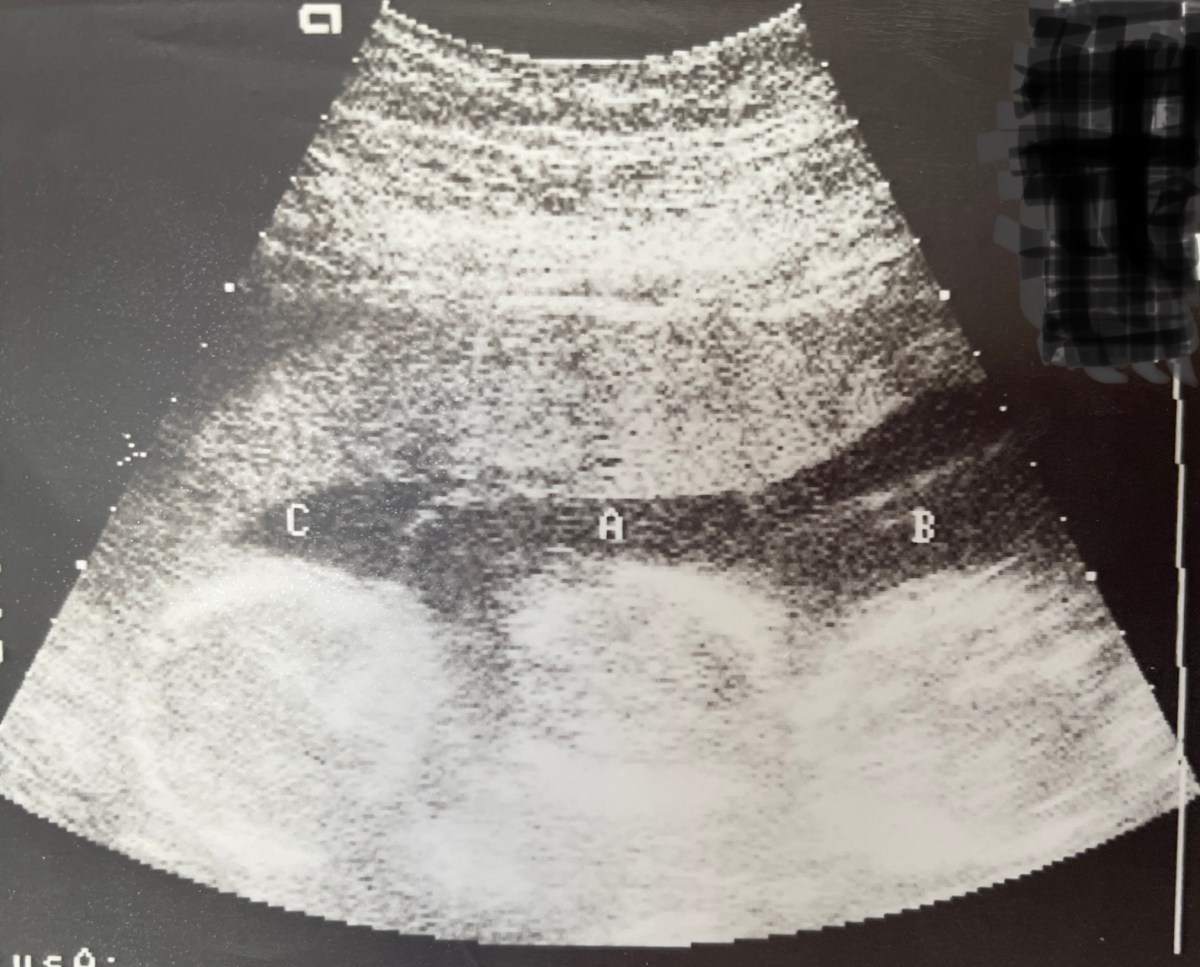
At this time twenty six years ago, I was pregnant with triplets. I had had a surprisingly uneventful pregnancy, that is, if you don’t count how it was achieved, the initial ultrasound that revealed three babies, the perinatology (high risk) practice my ex-husband and I frequented in the intervening 7-8 months, the eventual weeks of bedrest at home followed by a week in the hospital during which the babies received steroid injections to strengthen their premature lungs, the emergency C-section that brought them into the world at 32 1/2 weeks gestation, and the subsequent 2-3 weeks spent in the special care nursery until they were each ready to come home, healthy and strong, albeit small. What I mean by uneventful is I felt amazingly good throughout, never had morning sickness, and managed to keep working until essentially the last trimester. I felt so unpregnant in the beginning, in fact, that finding out the sex of the babies is the first thing that really made the whole situation feel real. I hadn’t been feeling anything, good or bad, up to that point. Finding out that Baby A, squished between the other two, was a girl; Baby B, in prime position for a normal vaginal delivery, was a boy; and Baby C, up in the “penthouse apartment” of my uterus, was a boy, was the first time I really “felt” their existence. I’m not talking about feeling them kicking…that came later, and plenty of it. But knowing what they were was a turning point. (It makes me smile to recall my Cuban in-laws referring to all of them after that as “the boys and the baby.”)

Every year as the anniversary of their birth approaches, I am visited by reminders of that time in my life. One is orange season. Since this time of year corresponds with the height of orange freshness, I naturally ate oranges during my pregnancy. After I told a friend how much I had been enjoying (craving?) them, it wasn’t long before a crate of Florida oranges was delivered to our house. I specifically recall eating them at work and peeling them at my desk while in conversation with coworkers. Who knew the simple act of peeling an orange would end up annually stirring up such a strong time-and-place association with my pregnancy. (The coincidence wasn’t lost on me, by the way, that Olivia Colman’s character, Leda, in The Lost Daughter, also had a poignant reminder of her experience as a mother that involved peeling oranges. Highly recommended.)

For many years, another annual reminder of my time on bedrest at home shortly before being admitted to the hospital for monitoring, has been the Westminster Dog Show. I recall struggling to comfortably lay on the leather couch in our living room and spending more than one day watching the preliminary “variety” and “breed” levels of the competition that preceded the prime time broadcast of the top awards. Joe Garagiola was memorable as one of the commentators. Sadly, the pandemic has impacted the show for the last two years so that it hasn’t aired during its normal time. I’ve missed it, but it remains a meaningful reminder of that time 26 years ago nonetheless.

It’s been interesting to realize that although these reminders from the external world help me recall my pregnancy each year, I really have very little in the way of my own documentation and/or reflections of that time. I regret that. I do have some ultrasound pictures–the old fashioned, not 3D kind–and little reminders from the hospital after they were born. But not much about what I was feeling or thinking about as my stomach grew bigger and their presence definitely became more felt. I’m sure there was a mixture of excitement, apprehension, and anxiety about how we would manage with three newborns at home. As it turns out, we managed quite well thanks to the loving assistance of friends and relatives who signed up for regular feeding “shifts.” Hmmm…I’m realizing at this moment how satisfying it was for me to set up that spreadsheet, along with the one those volunteers used to record input and output for each baby. Ever the organizer of information…

What makes me sad today is not being able to tap into the feelings of what it was like to be pregnant at that time. I could say it’s because the world was different then, that the technology that is so much a part of our everyday lives now and that makes it possible to instantly capture thoughts and feelings on our phones or in an app, hadn’t yet permeated our world 26 years ago. That may be true. And yet, I have journaled on and off throughout my life, with paper and pen; you would think this might have been one of those times. But apparently, I kept it all in my head. All the more reason for this blog, to capture some of my present thoughts and feelings to look back upon in the future. It won’t bring back those from 26 years ago, but may at least satisfy my–or others’–curiosity in the future about what I was thinking about in 2022.

It’s the little things

As I was trimming my nails recently, my thoughts turned to my mom. You might assume, from that association, that she was someone who spent a lot of time tending to her nails, perhaps regularly getting manicures and wearing nail polish. But she wasn’t. Her nails were of average length and the rare times I remember her having polish on them were special occasions like family weddings. She did always have a nail file (remember emery boards?) in her purse for the occasional fix. In fact, several years ago, she gave me a one-of-a-kind file with handmade adornments made by a local artist. I still have it. So yes, while regular nail grooming was normal for her, she didn’t dwell on it.

That’s not to say she didn’t care about her overall appearance. Quite the contrary. While she didn’t wear a lot of make-up, she was always put together. She was not a slave to fashion but appreciated timeless clothing styles and wore them well. Her closet was filled with lots of basic black and navy separates that were often worn with colorful jackets and/or scarves. She had beautifully soft white hair that was washed and styled regularly. She had outerwear for every possible type of weather and shoes for every occasion.

One of the first things to go, as they say, was her ability to trim her own nails. Maybe it was the fine motor coordination required to use a clipper, or remembering to do it, or most likely a combination of the two. Regardless, she knew when they’d get too long and need some attention. Lucky for her, she just happened to have a new husband who, initially, would lovingly trim them for her himself, despite his own inexperience. She gushed with appreciation every time he did, not only because the nails were back to a respectable length, but more importantly, because she had someone in her life, a partner who cherished her, who was willing to tend to those mundane needs when she could no longer do it herself.

Strangely enough, it’s reminiscent of when my dad used to trim our nails with a clipper. He called it nitzing. We all have memories of those moments. There are even photos that preserve what would otherwise have been an uneventful occurrence in our young lives, sitting on Dad’s lap getting our nails nitzed. But I digress.

Eventually other everyday tasks started requiring help. Putting on earrings. Writing a thank you note. Walking to the kitchen. Remembering what day it was. And during this time, she started getting more frequent manicures and actually enjoyed having her nails polished…a rare sight for those of us who had known her our entire lives. There were a lot of things that were feeling unfamiliar during that time. One independent act she held onto was filing her nails. In fact, she ended up becoming a little obsessed with having her favorite file nearby while enjoying afternoon tea or watching the evening news, two longstanding routines of her husband’s that fatefully brought much-needed structure to her life too. That file would often go missing and we would laugh when we’d find it in the couch cushions or under the bed. In fact, there were soon multiple files so that at least one would always be accessible when she wanted it.

It’s funny how we can be reminded of those little things and grow to treasure them. How an everyday object can spark a memory that helps you find some peace. I use the handmade nail file my mom gave me regularly and I’ve always thought of her when I do. That is even more true now. May we all come to cherish similar objects and memories for what they give us in the absence of those we love.

Need a Good Cry

I don’t cry anymore. At least it appears that way. And while I know it probably shouldn’t, that bothers me. What does it say about me that I am unable to tap into the emotions that naturally trigger tears for most people? I’ve experienced the deaths of my brother, both of my parents, a lifelong mentor, a college friend, and others in the last five years, and I’ve hardly cried once. I am not consciously aware of holding back. It just doesn’t happen. And I am unable to force it. In the meantime, I see people around me, many of whom have also experienced deaths of family members, who can barely mention the deceased person’s name, even years after their passing, without welling up; clearly an involuntary reaction but one that makes their feelings visible. Then there’s me, responding with no evident emotion whatsoever. What’s wrong with me?

I’ve recently discovered the website WhatsYourGrief.com. It offers articles, resources, online courses and a blog, all on the topic of grief. Its Baltimore-based co-founders are mental health professionals who have experienced significant grief themselves. “Our goal,” they say, “is to create a community that provides hope, support, and education to anyone wishing to understand the complicated experience of life after loss.” Their article about emotional numbness rang true for me and at least made me feel like my recent “inability” to cry may be related to a more complex grieving process than I realized.

“It seems like everyone else seems pretty in touch with their feelings.  They’re crying, they’re letting it all out, they’re encouraging you to let it all out. Friends and family show up in support and say things like, ‘I can only imagine everything you must be feeling right now’ and send you cards that say, ‘tears are a reflection of love,’ and you feel guilty because you’re not crying.”

“You know you’re sad about the death, but you can’t actually access the emotions and so you feel different than others grieving the death and you worry others will think you’re apathetic and question your love for the person who has died.”

https://whatsyourgrief.com/feeling-nothing-during-grief/

Having reflected about this “dry spell,” I have also recalled, with some relief, that there have been some moments in my life lately that have spontaneously brought me to tears. For instance, certain musical passages (cue Nessun dorma sung by Luciano Pavarotti) or impromptu singing by my daughter after Thanksgiving dinner, can definitely turn on the waterworks. Or watching my sister being walked down the aisle by my brother, surrounded by all my siblings and our dad. I even had a moment at my brother’s memorial service five years ago when, having not cried yet since his passing, I confidently walked to the front of the church to read Ecclesiastes 3:1-8, only to be overcome with emotion and almost uncontrollable tears as I started reading. Totally caught me by surprise, but inside I was comforted to know the tears were still there. That I hadn’t completely dried up.

So it appears maybe this crying issue isn’t about crying as much as it is about grieving. I’m ok with that; I recognize it’s a complicated and never-ending process that is unique to each individual. I will try not to judge myself for not crying when the world expects me to cry, or compare myself to others who wear their hearts–and their tears–on their sleeves. And I intend to revisit whatsyourgrief.com again for continued support.

In the meantime, I’ll crank up Luciano and let the tears flow.

Choose Happy

This post started as a rant about people who don’t assume control of their own happiness. I had a lot of anger and could not understand, a couple days ago, how some people can live in such a way that they have no motivation or initiative to improve their individual situations. And that’s exactly it: I have no idea what it feels like to live like that. I haven’t always appreciated it, but I now realize I’m fortunate to have always been willing to seek help if I was feeling stuck. And when there are unhappy people in my life who are not willing or able to do that, it troubles me because I don’t know how to help them.

I understand that vulnerability does not come easily to everyone. And while I’m not a therapist, I can speculate why. Fear of rejection or criticism. Low self esteem. Perceived weakness. Depression. And yet, Brené Brown says “vulnerability is the birthplace of innovation, creativity, and change.” This is my personal dilemma: How do I convince someone –or can I?–who may not even recognize their aversion to vulnerability that the benefits of “walking into hard moments,” as Brené calls them, is so worth it? That–sorry, one more Brenéism–vulnerability is not weakness; it’s our most accurate measurement of courage.

Life is 10% what happens to us and 90% how we react to it. In other words, that 90% is all about choices. If something bad–or sad or wrong or unfair or stupid or unlucky–happens, I make a conscious effort to turn it into something positive. If i didn’t, I would end up dwelling in the negative residue of whatever happened. And the only thing that comes from that is more bad feelings and a downward spiral into even worse ones. I reject offers of help and say hurtful things to people I love. Eventually it becomes easier to stay in the depths than it is to struggle my way out. Either way, I have made a choice. And just as I may choose to stay in the dark places, surrounded by hopelessness and fear, I can also decide I’d rather be happy. So one day I make a different choice. Then another. And another. Soon, the world starts looking brighter and I can see past the doom and gloom that had enveloped me before.

I do not mean to trivialize what could be clinical depression. I recognize finding happiness may not be that easy for everyone. That professional help and/or medication may also be required. But even turning to those options is a choice; one that demonstrates a desire to change. I stand by my affirmation that for each of us, our individual happiness starts with the choices we make. If we are not happy, we have the ability to make different choices and change the narrative.

And, as Brené says, we don’t have to do all of it alone. We were never meant to.

The Older I Get

I’m 61. While my age is not something I think about every day, I’ll admit it’s a little dispiriting to realize my siblings and I are now the oldest living generation in our family of origin. Of course, I recognize my reaction to that reality is based on my perceptions of people in their sixties when I was younger. I recall the surprise we sprang on my mother for her 60th birthday (I was a mere 33) when we all traveled to celebrate with her. How can I possibly be that same age, even older, now? How did the baby of the family, teasingly called Mrs. Cry Baby by her big brother, become a 61-year-old librarian with glasses and grey hair…sometimes even worn in a bun? When did that happen? Obviously, there’s no avoiding it. And by the grace of God and some good genes, I look forward to at least a couple more decades. In the meantime, I am learning to embrace all that is good about getting older.

For instance, the older I get, the more comfortable I am in my own skin. I no longer worry about trying to be someone or something I am not. While I admit to still comparing myself to others, I am less inclined to judge our differences but rather accept them. I was in my early 40’s when I realized, thanks to the work of Susan Cain, how strong my introverted tendencies are. Her 2012 TED talk gave me permission to be who I am, i.e., someone who actually enjoys solitude and quiet, instead of someone that the world expects me to be, always “on” and ready to socialize. Don’t get me wrong; I very much enjoy being with (small) groups of friends where conversation and laughter are abundant. But I will inevitably reach a point where I’ve had my fill and I need to retreat. The best description I’ve read about the difference between introverts and extroverts has to do with how they recharge their internal batteries. Extroverts charge their batteries by being around other people, while introverts do so by being alone. Count me in the latter category, without a doubt. I love living by myself, sitting by the fireplace with my dog, maybe enjoying a cup of tea or a glass of wine, often in silence. And while I have always enjoyed a good walk, when my 61-year-old arthritic knees are feeling up to it, that is, I will never be mistaken for someone who is active and athletic. The nuances of an introverted lifestyle suit me just fine and I do not apologize for the contentment I feel when I’m by myself.

The older I get, the more likely I am to say what’s on my mind and openly engage in conversation. I’m less worried about what people will think of me if I state the obvious or if my ideas are unoriginal or unpopular. In fact, while some would say I am brutally honest, perhaps even to a fault, I have historically held back in conversations with people I thought were smarter than me. If I couldn’t contribute with confidence, I would say little or nothing at all. I’m grateful to the people in my life who continue to ask the hard questions that inspire me to contribute from a place of humility. Sometimes, they inspire me to ask more questions if I don’t fully understand. In other words, I’m less concerned with being perceived as knowing it all and more interested in having a full understanding. Modesty is so much easier than trying to be the best or the smartest.

The older I get, the more I realize that sometimes older IS wiser. I have accumulated considerable life experience during my 61 years. I came from a privileged upbringing in spite of my parents’ divorce when I was 8; I graduated from a private liberal arts college; got married at age 30; explored several short-lived careers before having my children; went back to a school for a master’s degree at age 42; got divorced; lived in a 2-bedroom apartment and lived on a tight budget for the first time in my life; lost both parents; have been with the same employer for 20 years; continue to help guide and support my now adult children; and am looking forward to retirement in the not-too-distant future. So yes, rather than doubting myself due to inexperience as I often have over the years, I’m becoming aware that I might just be able to impart some of the wisdom that naturally comes from life experience onto others, maybe even for their own benefit. While I’m certainly no expert on interpersonal relationships (or cooking), I have managed to raise bright and creative kids; keep up with technology–or at least enough to handle email, blogging, and online research; read a fair number of books; manage my finances; own a home; and even learn new things like watercolor, in the midst of a pandemic no less. So while the number 61 seems old, a lot has happened in that time. And I’m better for all of it.

The older I get, the more I tend to live in the present moment. I draw a lot of inspiration from Pema Chodron who encourages us to “welcome the present moment as if you had invited it. It is all we ever have so we might as well work with it rather than struggling against it. We might as well make it our friend and teacher rather than our enemy.” This holds true when we tend to dwell in regrets from the past as much as it does when we worry about the future. Admittedly this outlook could potentially get in the way of planning for important things–like retirement, for example–but it also allows us to weigh the importance of enjoying the here-and-now while we can. Too much stress and anxiety, in my opinion, comes from worry over things we often have no control over. I’d rather put my energy into today and make the most of it.

I’m realizing as I’ve written this that the older I get, the more self-doubt and insecurity I am able to shed as I finally come into my own. My identity is no longer bound up in being someone’s daughter, someone’s wife, or even someone’s mother. While I will always be a mother, that role is changing as my children learn to make their way in the world…in spite of this damn pandemic. I am far from perfect and I intend to continue growing into my advanced years, but today, I am gratified to say that the older I get, the happier I am.

Keeping a List

For a little more than 10 years, I have been a member of a local women’s club that meets weekly between fall and spring to have lunch at each other’s homes and hear reports by club members on whatever interests them. From my fellow members, for instance, I’ve learned about seed banks, Elizabeth Holmes and Theranos, crypto currencies, and Murano glass, to name a few. While I have often wished the origins of this 100+-year-old club were not so ingrained in the world of white privilege many of us inhabit, I do like being part of a group of curious women who enjoy learning and sharing new things. In fact, being a mediocre (at best) cook who also happens to enjoy my solitude, I much prefer the reporting obligation over the hosting one. I have always enjoyed doing research. I suspect that might have something to do with becoming a librarian at age 44; I finally figured out what I want to be when I grow up. And unlike many, I like giving presentations or, even better, reading aloud to an audience. (That’s how most topics are presented in our little club…read from a typed report the presenter holds in front of her. Call me weird but that’s my idea of a good time.)

I have given reports on such topics as the MacArthur Fellowship, introversion, and the architect Jeanne Gang. I spent much of one year satisfying a lifelong interest by investigating whales, and another learning about the amazing art collection of Herb and Dorothy Vogel. It’s not unusual these days for me to come across a subject in my everyday life that piques my interest to learn more so I add it to my ever-growing list of Future Report Ideas.

I have started a similar list for this site i.e., topics that I think about a lot that I’d like to dig into more deeply on the page. Some of these ideas have been percolating in my brain for awhile; others are a little more fresh and new, having surfaced in my consciousness perhaps because I’ve decided to put some real effort into this project. Here are some that come to mind at the outset:

  • Buddhism
  • Grief
  • Relationships
  • Narcissism
  • Passion and compassion
  • Recognizing white privilege
  • Books and reading
  • Creativity
  • Education
  • The older I get…

This is not an all-inclusive list and I am not making a commitment to writing about all of the above topics. I offer them here as examples of the kinds of subjects that spin around in my brain. I’ll admit, it feels a little presumptuous to think that other people are going to want to read my musings about the things I think about. And maybe it is. But I’m going to take the leap anyway, trusting that doing so will affirm what I believe to be true: That others think about these things too and that we might just be able to find some common ground, some connection, as a result of meeting here.

Thanks for going along for the ride.
